Hi,
Some of you writing or reading might find this dictionary useful:
A Dictionary of Literary Devices: Gradus, A-Z
Bernard Marie Dupriez, Albert W. Halsall - 1991
Yeah, throw a peek in:-)
Sunday, January 12, 2014

Monday, January 6, 2014
The right hyphenation
There's nothing better than the right hyphenation, I guess:
~~~
"Oh, I suppose —" I made a suppositive gesture, which consisted of a slight outward motion of my lapel-grasping left hand, extending simultaneously the fore and index fingers but not releasing my lapel — the hand motion accompanied by quickly arched (and as quickly released) eyebrows, momentarily pursed lips, and an on-the-one-hand/on-the-other-hand rocking of the head.
The End of the Road by John Barth
~~~
Great novel, by the way. And the 1970 movie is quite original too, while faithful to the main lines of the novel.
~~~
"Oh, I suppose —" I made a suppositive gesture, which consisted of a slight outward motion of my lapel-grasping left hand, extending simultaneously the fore and index fingers but not releasing my lapel — the hand motion accompanied by quickly arched (and as quickly released) eyebrows, momentarily pursed lips, and an on-the-one-hand/on-the-other-hand rocking of the head.
The End of the Road by John Barth
~~~
Great novel, by the way. And the 1970 movie is quite original too, while faithful to the main lines of the novel.
Tuesday, February 19, 2013
I would like to announce this giveaway open to my readers in the US and Canada that are Goodreads members:
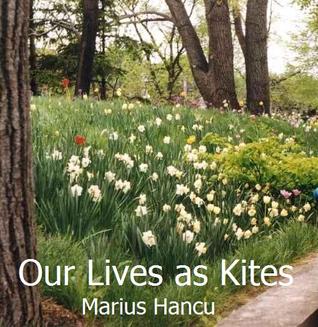 Enter to win
Goodreads Book Giveaway
Our Lives as Kites
by Marius Hancu
Giveaway ends March 19, 2013.
See the giveaway details at Goodreads.
Sunday, November 4, 2012
Great reviews for Simon and Hiroko
Amaranta (twitter: @Lalettricefelic), an Italian literary blogger:
___
I've just finished reading Simon and Hiroko. I think it's very interesting and absorbing.
___
At Goodreads, American fellow writer and blogger Julia Hones writes:
___
With a strong, unique voice Marius Hancu tells us a story that reveals the intimate lives of Simon and Hiroko. This is a novel that combines suspense, romance, eroticism, action and drama. Simon, an American professional photographer, falls passionately in love with Hiroko, a traditional Japanese dancer. Their love for each other is intense, but their “road” is full of obstacles. The fact that they both come from different cultural backgrounds makes it even more compelling. Hiroko’s father is against this relationship; her father had been killed by Americans in WWII and time never quelled his resentment. He will do anything to stop them from getting married. This novel will take you to Japan, to the glamorous streets of New York and to the wildest parts of Connecticut. The author has the ability to make the tension escalate throughout the story while tapping into history, politics and conflicting family relationships. The end stirs strong emotions. It is the kind of ending you will never forget.
___
On twitter, a PhD candidate in neuroscience from Toronto, Alice Kim:
Alice Kim
___
At Amazon, Dona Flor, a reviewer with an obvious love for literary pen names, writes:
------
'From ancient grudge break to new mutiny,
Where civil blood makes civil hands unclean.
From forth the fatal loins of these two foes
A pair of star-cross'd lovers take their life;
Whose misadventur'd piteous overthrows
Doth with their death bury their parents' strife.'
(Romeo and Juliet, Prologue)
Simon and Hiroko by Marius Hancu might be read as a modern version of the story of the lovers from Verona. Hancu's novel is set in modern Japan: Simon is a young American photographer and Hiroko a dancer. Hiroko's father, a Yakuza boss, has never forgotten the end of World War II and cannot approve his daughter's love for an American boy. Simon's family doesn't understand his job choices and feel only contempt for Japanese people. But Simon and Hiroko love each other and want to overcome all these sufferings... will they be able to live their life? Will they succeed in being free from their families' burden? In a climax of suspence, grief and incomprehension, Hancu tells us a fascinating story about the power of two young people in a world that tries to suffocate one of the driving forces of human life: love. But hatred is strong as well and Simon and Hiroko will have to fight.
___
At Goodreads, British writer Julie Elizabeth Powell says:
"[I] will say that this book gives wonderful insight into richly woven worlds."
___
At Amazon A. Voicu "I strongly believe that this is an A+ grade material for a movie, which offers not only a sweet love story, but also lots of suspense!"
___
At Goodreads, British writer Julie Elizabeth Powell says:
"[I] will say that this book gives wonderful insight into richly woven worlds."
___
At Amazon A. Voicu "I strongly believe that this is an A+ grade material for a movie, which offers not only a sweet love story, but also lots of suspense!"
___
Saturday, October 27, 2012
Yvonne Choreographs W.H. Auden: Body and Soul
Hi.
The second chapter sneaks upon a conversation on her work among some of her peers.
Enjoy.
_______
No one but she could diagnose the problem. It seemed to be, for the uninformed viewer,
most of it, or perhaps the entirety of it, a lack of sync between the
synthesized music and the entrance of the first dancers on the stage, something
that snowballed, in a sneaky manner, into a serious mess within just several beats,
quite obvious to most of those present in the rehearsal hall as a rupture of
some kind in the flow of the ballet and thus doubly scarring to her nerves, as
it was she who was the choreographer in charge of the show in the works.
A forest of small pyramids, all
white, in plastic, lay about the stage, temporary guides for the dancers,
indicative, together with some lines in chalk on the black-painted wooden
floor, of some of the main intended paths as marked in her motional diagrams,
as cones in a driver’s course would be, and several of them were turned over, a
sign that some of her charges were still lacking control or focus, or were putting
impetuousness before precision, a major gaffe,
as she had learned from cool Mr. B in New York City. The diagrams sat unrolled in apparent
disarray on a desk standing skewed in the corner, as old papyruses would
— awating grander plans and poetry for the Pharaoh.
The dancers had to execute a
rush of serpentine movements, crossing each other sometimes at elbow’s
distance, and there was no telling what would
happen until they got it into their systems — the set trajectories
of their bodies moving over the floor, and the appropriate calibrated energy to
be injected into it all at any given strobe in time — with bumping each
other the major risk, some of them already displaying on their bodies the
traces of such unhappy encounters, in
bruises on the outside of their upper arms, or in dark purple she knew hidden
by their tops on their ribs. The
movements had to come in swooshes and spurts of energy as the music was pitched
uncomfortably higher, while more volume gradually and sometimes surprisingly
pushed out of the loudspeakers too. There
was drama in the screeching intensity with which they had to suddenly turn at
some imaginary crossroads marked by some of the cones, and Yvonne had
encouraged the dancers not to avoid sliding on the floor at such short
direction changes. “Losing balance and
‘skating’ a bit — she made air quotes sign — looks good if you don’t
mess up too much, say by falling or bumping into others head-first like a
train,” she argued, shouting out at them, hoarse voice and all.
She decided she needed some height
in order to have a better view of the action, while still being close to the
dancers, so she took a cafeteria table, yanked the oilcloth off it, clambered,
or, in fact, jumped over the edge of it, crouch-pushed from legs and arms up
and away from the surface of the table and stood up over them all.
“Please replace the cones along
the chalk lines, everyone,” she asked,
raising her voice to be heard through the subdued jabbering among the dancers
and the shuffling of ballet shoes over the floor. “We need to restore some order to this place,
as it’s begun to look like an untended stable.”
After five minutes, the markers
again in their places, she told them, “Listen, guys, while running around, I
want you to keep sighting your designated partners, so the public would see you
all looking for your loved ones among your crowd, searching for them. I don’t want you to just run ahead on
automatic pilot, without looking left and right. I need the drama of searching in your eyes. Crowd them and the rest of your faces with
longing, desire, whatever, just don’t behave like robots. All the same, you’re entitled to look now and
then at others, sexually spying on them, checking them out. You’re tied and you aren’t tied to your
designated halves, hope the message is understood. Everything right? Take your places, then, please. Second part, first movement, all right?” She nodded to the audio guy to start the
tape, pointing right away to the ceiling with her forefinger that she wanted
more output from the loudspeaker, then making a short horizontal slash of the
air with the palm down when that was reached to her satisfaction. After ten bars, she pushed her hand straight
ahead, finger pointed, as if lancing someone — “Go!”
From four corners of the room
the dancers came, from two of them, in one diagonal, the men, in white, from
the other two the women, in red, one after the other. They ran in four spirals converging in the
same point, the center of the stage, which was supposed to crowd them in something
similar, perhaps, to some, to one moment in Béjart’s mise-en-scène for Sacre du
Printemps. Then, when they had converged, they would
immediately separate with the pulsing-in-pulsing-out motion of a heart, out and
away diverging in four spiralate strings again, most of them now however in
pairs, hand-in-hand, mostly heterosexual couples, but not all of them, and some
singles interspersed here and there. The
tempo of music accelerated with the start of the pulsing out, and slowed toward
its end. The four trajectories spiraling
out didn’t however end in the corners of the room but threw all the players out
at different points on its periphery, where they disappeared, except those
facing the proscenium and the public, who froze in caressing and adoring
stances, gazing towards undefined points in space as if transported by the
prospect of the future, its hopes and its pleasures within.
Then the lights dimmed, the
music slowed to a virtual stop, and all the dancers discreetly filed toward the
periphery of the stage.
They all emerged, separate
again, the heart had another half-cycle and they emerged paired up once more.
Three full cycles — that
was all Yvonne had thought it necessary to drill into the consciousness of the
viewers the eternal searching for partners, the pairing; she thought that in
art themes should always be powerfully issued.
Burning the spectators by
overexposure was a small risk she was quite willing to take to carry them along
on the journey, and she intended to offer no excuses for it. She had also had the music rewritten just to
show more recognizable themes.
***
The chalk is here, written in the heart too, and I feel it
rasping over what they call the inner cockles of it, as a file. John and Laura are set to emerge the first
from the corners. I know whatever is wrong there happens during the crowding in the
center, in the helter-skelter of finding the exact partner and emerging in the
designated pairs. For heavens’, it so
simple! Everyone should follow the small marks in chalk on the floor. What is it they do to mess it?
It must be something in the
pairing, the music is at its peak then, and one can easily lose focus, crowded from all sides by other people
reorganizing and repositioning themselves while running — jogging in
effect, as things are still not that fast — also, to boot, the sound sharp
banging in your ears.
Still, there’s something much
deeper that bothers the heck out of me, and I haven’t told them anything, as I
may seem undecisive, should I open my sweet mouth before finding a solution to
this one — it’s the feeling that there’s too much of a mechanism and
straining about it and not enough sentiment, and I don’t want to be called just
an ordinary amanuensis of the hieratic priest of teamwork, Mr. B, that’s how some have called him, God
keep him in his airs and graces.
There’s this too with many of
these and other dancers — their classical training, it shows
— they’re too disciplined and perhaps rigid-looking to the modern viewer,
a bit programmed in their motions, too wooden in their embedded care for attitude to let off enough of their own
steam. I need to take care of it
somehow, inject a healthy dose of natural in their moves. Rethink them from scratch, even.
***
There was some method in her locating the problem though. She watched the dancers’ feet and carefully
listened to the sharpening music, she knew those tripping had to fall out of
sync with it some time during a sequence of critical beats, overmatched by it. Everything had to start from the base, from
the feet. She suddenly became aware the
music was just a huge swoosh at the
time of the trouble occuring, no local rhythm to it — no damn beat in it, but this is
how I wanted it — just the overall progression, the feeling of an
absorbing black hole in full suction mode.
***
It must be this, the lack of beat, of punch, of clear tempi,
the amorphousness in the music, this gets them into trouble, as there’s no
compass anymore to hang on to it. Still,
I don’t want it changed, I’ve already bothered John no end about it and, in
fact, the music is fine now, it’s just difficult to sync with it at that
particular time. I’d better think about
something else, no doubt. Give them other reference points to look at a
parallel music or sound tape, running independently of the main one, heard only by them. OK, feasible, but I don’t want them loaded
with headphones or gear like that. A
light signal, glimmering on-off on the intended beat? That would give them a good enough clue. Right, a strobed light would do fine, I
think, flashing right above our group, high enough not to be visible even from
the seats closest to the stage, strong enough to be distinguished by the boys
and girls, still, weak enough not to create any shadows on them. That could be it — a hidden lantern.
***
One hour and twenty minutes later, the lights manager has
bricolaged an improvisation: a gray lamp, hung above the dancers, a long cable
leading to a nifty push-button switch in her hand, while she was still standing
on the cafeteria table. “You barely need
to touch it and it’s going to switch off and on. You should be fine,” he said.
Now, with everything literally in her hands, she tried the switch
several times, then spoke up.
“Come on, everyone, break’s
over. Let’s get into it once again. Now, please listen carefully. We’ll use this lamp for syncing. For the time being, just manual mode, thus
pray I’ll be right and that my fingers are still fast enough. Putting in a second track with music to sync
the light will definitely take some time, so I’ll try to fix our mess this way
for now. So, please run forward, or
better, move in general on the approximate beats or strobes of the light. Approximate, as I don’t want us to look too
regimented. Thus allow yourselves some
tolerance with respect to your neighbours, don’t strike or step too strictly
with the music, at the same time as them.
“And think again through Auden’s words ‘Body and soul (Not-Me and Me) can have no independent existence, yet they are distinct, and an attempt to make one into the other destroys,’ the motto for this piece. You hear me? Destroys. That’s what we want to show, this unity inside the human being, sought after all our lives, which we can’t escape either all our lives, which in the end is still a fight of opposites. We would on some days, if we could, live and play just for and through our body, on others just for the, ethereal or not, pleasures of the soul, just for imagination. But we can’t. This seeking and escaping is all we want to show, the recovery, the loss of oneness. Seeking, escaping, oneness in one and in the couple, it’s all. Our flow and movement should tell ebb and flow, flow and ebb, you know, attraction and rejection, loss that is. The very short happiness of oneness, of meeting the match.
“And think again through Auden’s words ‘Body and soul (Not-Me and Me) can have no independent existence, yet they are distinct, and an attempt to make one into the other destroys,’ the motto for this piece. You hear me? Destroys. That’s what we want to show, this unity inside the human being, sought after all our lives, which we can’t escape either all our lives, which in the end is still a fight of opposites. We would on some days, if we could, live and play just for and through our body, on others just for the, ethereal or not, pleasures of the soul, just for imagination. But we can’t. This seeking and escaping is all we want to show, the recovery, the loss of oneness. Seeking, escaping, oneness in one and in the couple, it’s all. Our flow and movement should tell ebb and flow, flow and ebb, you know, attraction and rejection, loss that is. The very short happiness of oneness, of meeting the match.
“OK, enough pep talk on my
part, let’s get going. Sync with the
light, everyone. And on!”
The music rolled out of the
loudspeakers. Keenly she observed them,
oh, yes, and waited for any signs of confusion.
However, there was no more bumping, the whole of it much smoother,
focused and hotter on the part of the dancers.
***
I might have just moved Pavlov’s dog to react … Heavens,
great to be past this snag. Still, there
doesn’t seem to be enough visual contact and searching between them. It’s as though I had to go among them to
provoke some real eye and hand holding as they do in kindergarden to pair kids
up. Good to have three weeks still till
the premiere. They need to visibly
search for partners and, when finding one, to lock in on them — caught you! I
mean, visible for the parties of interest, and those, modesty makes me play
this tack, are only the spectactors, and we really need to snag their interest
or this will be a short run. The eyes,
the arms, the facing of the body, its momentary tilt while in motion, must all
show that — and — Passion! Burn! Told and re-told them that maintes fois but they must be thinking
of tonight’s tumble in the hay with Miss Margaret or Mr. Faust, or whomever, I
don’t know.
The props, that crowd of huge
eggs breaking up on the stage right at the beginning, to reveal yolks and egg
whites, function well enough, can’t complain, I mean they open gracefully and
gradually enough, as flowers would, as I had wanted. A lunar lake with crackling eggs. Still, something must be done about the
lights, there must be some graduation in the way the dancers assume their final
colors, the women the red, the men the white.
The drift from the yellow of yolks to the red which is carried most of
the time by women on their tight, thin body suits — they do look like
divers, that critic whom I invited at the rehearsals, Rebecca Dubbs, was right
— isn’t helped by the illumination.
Having those yolks and whites as long light-colored bands of ultralight
transparent silk fluttering up from the broken shells while initially covering
the people hidden in the egg, as well as the fans blowing them up, should make
this all easy, they just need to point the lights to them and gradually change
colors in a very limited area of each egg, as the dancers emerge. They probably need to use more focus and some
filters, I don’t think or pretend to know myself what exactly they need, but
I’ve already told Jacques to look into it for tomorrow and it’s his job to deal
with, together with the set director. I
told them the drift of it, ‘What I want is eggs, eggs, eggs, followed by bands,
bands, bands, then people, people, people, and nothing too damn strictly
synchronized or time-regimented, we want some spread on those events — an
egg cracking here and bursting forth its precious contents, another, doing the
same a bit later in some other place, and so on and so forth — otherwise
it gets all too mechanical and we’re starting to feel as though dropped into a
world of robots, definitely not something we have in mind. Now, how they take care of the lights in this
transition is only their cup of tea and I won’t try to stick my oar in, but I
need my effect.’
***
Two hours later, Antonella Boeru, the stage director for the
production, a Romanian recently arrived to the North-American shores, and this,
she said, after dodging bullets on the border to Yugoslavia over the ploughed
no-man’s land, from her loving, generous fellow-citizens doing the coward thing
for Ceausescu, sat at a huge table in an open-area office behind the stage and
played absent-mindedly with her own model stage sets, in front of Jacques, the
light manager. They were alone, Yvonne
having left them to their own devices with what was her unmistakeable harbinger
of trouble “you need to focus, guys.”
“I wish I knew what she wanted,” she issued, sighing, chin propped in.
“I think I do. She wants something less obvious during that
initial scene, nothing too striking,” Jacques dared to advance, still
mouse-like. New to the team, this Romanian, so Jacques had
decided to play carefully, not to hurt any sensitivities. Can’t show oneself too clever.
“But we’re already there, to my
mind.”
“Not to her, and that’s all
that counts. I know her, she won’t let
herself be convinced when she feels there’s something wrong somewhere. She just hangs on to it and to you like a
bulldog, and something has to give up, and that’s usually you, I’ll tell you. That’s her sixth sense, she argues.”
“Fine, I think I can deal with
that. I’ve never argued for her giving
up on anything, just for telling us what exactly she wants.”
“Well, she has this idea that
you must be empowered to do things your way, thus she won’t give you too
detailed pointers, not to straitlace you, that is.”
“Fine, it’s good to have some
give-and-take, still, I wouldn’t mind more of a framework, you know what I
mean, within which we can play,” Antonella said, looking a bit unsure of herself
and of the whole situation. This is a new,
another continent, for her. Something
she might say wouldn’t be understood the same way as in the old country.
***
Yvonne, she was flying once again. High, and the thoughts were with it too. The
eternal separation intervening at death, souls who couldn’t survive without
their bodies — forget the religions
— except in others, in their fragmented, kaleidoscopic, but not
entire, broken and broken-edged, and worst of all, again time-limited, images
of you.
***
They come in terribly disjunct sets, and if one believes
religion, or poetry for that matter, most of the time it is only the soul who
is immortal, the shelf time of any body out there terribly finite and of
course, this is elementary math now, much shorter, always making its owner
unhappy with his or her contract.
For what we know, they are put
together or, maybe in a more fortunate expression, grown together by parents
and society, and for the duration of a lifetime, they manage to tolerate each
other and shack up. Is this a sexual,
perhaps even an incestuous relationship?
If only they weren’t so unlearned, undecided or secretive about it, the
philosophers or the theologians.
To start with the duet, the
one’s body and soul and to move to the quartet, those of the couple. They emerge from the eggs as the primary
pair, run through childhood and adolescence to young adulthood and there in
that sexual crowding in the centre of the stage the messy quartet, the double
pair, two souls, two bodies, emerges, with its own attractions and rejections,
conflicts much more than squared, perhaps cubed, or whatever power is left in
algebra to show unexpected branching and multiplication in infinite trees,
sometime happy, sometime cancerous, of self and of each other destructive. You have the nuclear adjective at its most
potent as this is the stark, fecundation’s fundamental pair, still nuclear in
its potential boilovers and blowups.
JOHN MARCUSE: I still
remember being paired up by Yvonne with Joanne Skeen for Body and Soul, two years ago or thereabouts. After the first barre class where she met all of us, she told everybody on the cast
that pairs and pairing were to be a big thing in that piece and that we had
better get used to the idea and to our respective partners. She then gave us the pairings, which she
seemingly had eyed and thought about and done during the previous week, while
attending other shows of the company as well as classes.
JOANNE SKEEN: Yeah, and some of us then thought, why not, that
might involve even some more intimate knowledge and some laughed that could
mean even sex. Now, I can tell you now
that in the end I really got to know John better, but in unusual and unexpected
ways. Not that I didn’t know him before:
we were in the same dance company, when all was said and done; nothing unusual
to it. We all knew each other some way
or another, many were involved, shorter or longer term, with someone from the
company, but Yvonne wanted us to get sort of ‘mood- and physically-synced,’
those were her words, by spending meaningful time together during rehearsal, and
I mean just for setup, just to get in the skin of the characters. She was supposed to provide the definition of
“meaningful” to us, and, dear me, it was to be an original one.
ANN DICKSTRA: So, next
time, at the first rehearsal, she brought in twenty five copies of a book with
Auden’s complete poems and told us to be prepared to read from it to each other. What we’d read was supposed to be our choice,
but it had to be longer poems, at least two pages in length, she said, in order
for the right mood to set in, to settle and coalesce in each of us. And that we should switch from one to the
other in the pair after each page, in order to shuffle the meaning and the
involvement between us as in a baton passing in track.
ARMAND DEFERRE: And,
no, it wasn’t only for half an hour that we would to do this, it’d be a full
hour, count on it, she said. And what
would be next off, someone asked. Well,
she said, barre work in couples, for
one thing. Yoga work, again in pairs,
for another. And there’s more to come. She was to direct it all, she said, and I’ll
tell you, when it came on, it was nothing fast.
A lot of supported stances, on both sides, which the ladies found a bit
strange, as we’re normally the supporting party. No, she wanted each of us to feel the weight
of the other, the tension in her or his muscles, his or her flexibility at the
moment, his or her apparent insecurity about a move or, worse, about
themselves, there and then. And, this
part, we needed to do it in complete quiet, to listen to our partner’s exhaling
and inhaling, to weigh and time our support on it, as though she was the lost
petal and I was the wind carrying her a-flutter, or the other way round, you
get me.
LOUISE FINGERMANN: And
there was no music in any of this, but it came in soon enough — Bach and
Handel; a lot of them — in other parts of the ‘unification,’ that’s how she
called all of this. I think now of
Kubrick’s Barry Lyndon, same measured
flow to it, that’s exactly how it felt at the time.
JOHN MARCUSE: But the
strangest bit must have appeared the notion of playing chess with each other,
especially as many of us hadn’t moved a chess piece in years, and many others
didn’t know how to play at all. Mind
you, we’re not mental intellectuals, but physical ones. I, at least, sometimes, think of me as a
laborer. (Catcalls from the others “Yes,
you are one, John.”) You too, don’t worry.
But in the end, we got to that too, and you could see the what, the
twenty, thirty pairs of us, sitting akimbo on the parquet floor — wow, I still
feel the pain in my butt — of the rehearsal hall, moving small pieces of
plastic and challenging each other with “check” or “mate.” “Those who don’t know have to teach the
others,” was Yvonne’s short reply to our initial backing off and rearing up in
the face of this challenge.
LOUISE FINGERMANN: No,
that wasn’t the strangest thing. That
was to come when she asked us to prepare for a rehearsal by running in circles,
again in pairs, for half an hour on the stage.
We had to hold the hand of the other; this might have been the toughest
part. Imagine running several miles, it
must have been six or seven, while holding someone’s hand. “Comes with unification, body and soul coming
together, as Auden wanted it, man and wife coming together, as I see it, she
told us.”
ANDY DONGARRA: The
body and soul being paired during the life was a big thing for her. It was
as though at birth they were separate, floating around with no aim, like
separate balloons or what, until education and experience and simply growing-up
put these two entities together — don’t laugh at me, it was her who said
“entities,” I’m not into those words — and now they were one in the same vase,
she said. And it was the same with man
and wife, life put them together, some fumbling through chance again, but in the end the fit is found and kept up for
decades, if it’s a true fit, or otherwise time finds it out and dismisses it,
and another one is tried out, if we’re lucky or we’re left to loneliness. And all this “unification,” I mean strands in
it, must have come to her from Stanislavski, or Stella Adler, or Brando who was
her star pupil, “Method Acting” or something like that, immersion. Now, if any of you laughers have seen “A
Streetcar Named Desire,” I mean the movie, you know that at least for Marlon it
darn worked.
LOUISE FINGERMANN: Still,
now that I’ve mentioned the running, I’ll have to say that about her, she was
running herself the full monty with us.
JOHN MARCUSE: And
damned if she was any tired by the end of half an hour. I mean, no breathing any harder, no sweating
— at all.
LOUISE FINGERMANN: Well,
that’s no big news, she was known for this from times when she was active as
ballerina. Partners said it — no sweat
from her. Big plus for any partner, as
all of us know. You don’t get messed up
by the other, you’re not his or her occasional towel. I, for me, I know I can’t offer this
advantage and I’ll use this opportunity to apologize to all present, heh, heh.
ANDY DONGARRA: You
serious? Most of us do it, I mean the
sweating. Why do they keep those towels
in the sides in performances? Natural
urge of the body, or secretion, to call it straight. But yeah, Yvonne was that way in those
rehearsals. No sign whatsoever of being
tired at any time. Gosh.
JOHN MARKOFF: And yes,
it was at roughly at that time, that in theatre, not in ballet, in Leningrad, I
mean old Saint Petersburg, Russia, they brought Lev Dodin in back from the
cold, or was it Siberia, into directing, and I’ve heard he too was into a lot
of immersing into the role and long rehearsals.
So, here you are, different strings to different folks, but Yvonne was
into something both old — as Stanislavski was what, turn of the century, way
back — and new.
ANN DICKSTRA: Still,
us is us, I mean dancers, but the thing to watch for me in all that was her
secretary cum assistant, her amanuensis, what was her name?
JOHN MARKOFF: I think
it was Sarah.
ANN DICKSTRA: That’s
right. Sarah. I mean, she had been a dancer herself, back
in Yvonne’s times, certainly less distinguished and all, still, a dancer. And it was a sight, I mean her face, watching
what her boss, Yvonne, was getting into.
It was as though what she was watching were the travails of a fool, who
was doing things not to be comprehended, and for no practical purpose. She must have meant, like we all did at the
beginning, I mean, chess and running? What
for, Yvonne? But we got our answer in
the act, the performance itself, the feel, the energy and the smoothness in it
all, and mostly the being-into-it, while she seemingly was left with just the
writing down of everything, without, I thought from her face, the best of
understanding or effort.
JOHN MARKOFF: Nah,
Ann, you ladies are too tough on each other.
Fact is, at times Yvonne looks to me to be a great choreographer, at
times bordering on genius. You think I
should take a hike on this genius thing.
Fine. Anyway, any times you have
a person like her, it’s bound to face some lack of understanding from her peers. This talk here is just proof of our initial,
or even current, misunderstanding of her.
So, why fry Sarah more for it than what we should ourselves deserve? All right, I see where you are coming from:
she’s her day-to-day assistant, she should be familiar with her manner of doing
things and thoughts, and so on and so forth.
Yeah, that’s right, but you know that?
Familiarity doesn’t necessarily breed understanding, as you may be
bumping against your inner limits or on your old thought reflexes.
AURORA PARASCHIV: Surely,
those two were and still are — as they are yet together, as far as I know — as
fire to water. I remember Yvonne having
somehow clambered up under the lights at center-stage, during the rehearsals of
Body and Soul, on some perch up there
known only to the techies, only to see the effect from above of the light
strobe she had arranged with the light-master to sync us, all this while Sarah
was sitting quiet on a stool underneath, taking notes, but so cold to the
progress so obvious to all of us after that move.
JOHN MARKOFF: I’m
older than most of you guys, so perhaps Yvonne tells me more. Once, she mentioned to me that at the
beginning of the eighties, eighty-three, eighty-four, she kind of bottomed out
and then gradually figured out the only way to keep the light on in her life,
some fullness to it, and I think I’m close to her words here, was to go into
choreography. I’ll tell you, when you
think that way, you’re doing things with some swing, you feel at times that
you’re the arrow in the bow. And, just for myself, I can still remember
what she read to us from Auden’s No, Plato, no on the first day of rehearsals.
__________
Thursday, October 18, 2012
Yvonne Does It Stream-Of-Consciousness Style
Hi.
It's the end of the '50s ; she's not even ten.
This being about ballet, anything about flow is important. So, I decided to let Yvonne shake the reader in her/his slippers by going free flow, stream-of-consciousness like, in the second part of the chapter.
This is what a Big 5 editor had to say about this particular chapter:
---
The sudden plunge into the stream-of-consciousness of the young Yvonne is certainly effective in reminding the reader to pay attention & I really do think that your command of her voice is very confident & convincing ... As it currently stands, it’s a very compelling voice
--
Just fasten your belts, à la Felix Baumgartner, hydroplane/skim over the words (I was to say "over the floor"), grasping for meaning, and you'll be safe and sound over to the other side, heavily breathing, as at the end of long solo dance, but hopefully looking for more chapters. And just remember, Jonathan Coe had a 30-page-long love scene in the Rotter's Club written in this glorious style. So, Yvonne took it easy on you.
Enjoy the ride.
_____
Remote
times, now, she found it more and more. And
it was in those remote times that she had grown her shells on, one above and
around the others, a tortoise grandly residing in her soul.
The
first shell, the innermost and the source for all others — for anyone trying to
get in touch, on some level or another, with her — the remote and untouchable
star around which everything turned, was, for her, the ballet.
She
must have been four when her mother started to take her in busses and trams to
an elderly lady located somewhere in the Beaches, who had a small studio for
children. The lady had been a corps
dancer with the Les Ballets Russes in
her youth in Paris and recalled the later reincarnation, Les
Ballets Russes de Monte Carlo led by Colonel de Basil, touring the States
in transcontinental trains during World War Two in search of an audience.
With
too many robberies around her neighborhood, the old lady had bought two huskies. Castor and Pollux they were, one patrolling
the outside and one the inside of her average-size house — built while her
husband, a bank clerk, still lived, and took care of the material interests of
the household. With their massive,
thickly-furred, unfriendly presence, they instilled a fear of dogs, especially
large ones, in the young Yvonne that would stay with her for all her life, to
the benefit of domesticated felines. That was her second shell,
as it were, at least for the dog lovers who might have wanted to get closer to
her and never did. Never would Gilbert,
her father, be able to rid her of this fright, with all their going together,
to playing areas for the dogs in the city, just for the sake of convincing his
daughter that not all canines wanted to shred you to pieces the moment they got
sight of you.
The
old teacher — she was by then in her seventies, still showing a ramrod back — would
shoo away the dogs the moment visitors were in, to tether them in a backyard
closed-in by sparse wire fence, as she had figured that lights and the movement
of people inside would keep away robbers for the duration of the visits. Also, she didn’t want dogs running amok
through her classes, bumping into students at those times, or worse. She would always wear corduroy pants for
classes, which suited well her slim carriage, of which she was proud. The large living room of the house was used
as a small dance studio, with a barre
on a side, the rest of the room being parqueted with no rugs and the little
furniture there was being carried away to the walls, wide windows generously
letting light in at any time of the year — the teacher hating having people
dance in the dark, as, she complained, it caused her headaches, too dire a
sight to contemplate, she said, dance is Apollonian, thus protected by the
light of the sun and should stay so. In
one corner, she had an upright piano on which she played the music to which the
pupils were supposed to dance or drill, with authoritarian fingers
punch-stressing the rhythm so that the young dancers would know what and when
to emphasize in their pliés, arabesques or pointes tendus, with her right hand
suspended up in the air toward them whenever she felt that a fluttering of
fingers or a flight of an arm would help their suggestion and imagery, their
butter-melting to the music.
Presiding
above the whole room was this huge elk head, decapitated and stuffed by a
taxidermist after a hunting exhibition in the North by her late husband. “He’s Jowls; don’t mind him too much; he’s
very placid these days, ” she laughed, sometimes, on her good-humored days,
adding perniciously, “he’s retired from everything, from stud too,” sotto voce
to the adults bringing in their children to her lessons, who sometimes stayed
for the duration.
Placed
against a side wall rested a bench on which all students would sit to adjust
their ballet slippers, tie them up tighter or simply retire for a short while
when too tired, or in tears from some of the comments received from the old
lady, the old hag to them in those times, which were both harsh and encouraging
at the same time. It certainly was the
“bench of tears,” as it had seen them at their worst, after hours of drills and
rehearsals that apparently didn’t seem to produce anything. “Ars longa, vita brevis,” the teacher told
them.
The
bunch who assembled here was a good one, many of the children going on to the
National Ballet’s school and some of them — true, very few of them — even to
dance with the Ballet, and the parents didn’t skimp or scrounge paying the
pretty penny involved in order to get there, as Mrs. Johnson’s hours weren’t
cheap by any means. Thus, this is where
Yvonne made many life-long acquaintances, friends and rivals, all in the same
bowl, for in this art, as in others, you can have all of them in the same
person.
Also,
this is where another shell gradually grew on her, her own body, steeled to
pain in toes and foot arches, in ankles and knees, the body of someone who had
to be ready to respond the cry of “the show must go on” and to hold the flag
high. She recalled how flexibility came
gradually as a gift of the long drills, how a split which wasn’t available
before became second-nature, drawing wows from the children in her neighborhood
who didn’t know anything of ballet or gymnastics and couldn't compete with such
apparently awesome feats. And the other girls would touch her thighs and wonder “Your
muscles are getting as hard as a boy’s; there’s no softness to them any more; aren’t
you worried?” but the shells were already on her, so such questions were
readily dismissed.
So,
when after innumerable adagios with rondes de jambes a terre at the barre, she went back limping to Mrs. Johnson’s
bench, and had to wonder also if her beauty wouldn’t be affected by what she
had just done, the beauty as seen by boys — who were the people who really
counted, the ultimate arbiters of femininity, as told in those years by her
mother — she needed all the moral reinforcement that came through other
channels, and most powerfully from Mrs. Johnson, who told them all the time, in
her voice made hoarse by classes, “Girls and boys, we’re dancing for the
ineffable, to voice our inner yearnings, not for any profit or worldly pleasure. In fact, we’re dancing beyond all this, in that
space in which poets and singers tread, and even past that, as our tool, our
body, is the most flimsy, the most temporary and perishable, and nothing is
left, except in ether, and even there there are only few and puny drops of our
dances. Except for those of us lucky
enough to be taped for TV, and this only recently. And by the way, the door is open for those
who don’t enjoy the view; I don’t want any of you or of your parents to come
over to complain that you weren’t warned.
But, I’m asking, is there anything more beautiful than a well-timed développé?” And Yvonne, she didn’t know that space in
which poets and singers treaded, as she wasn’t reading too much anyway in those
years, except for school, overwhelmed by ballet classes and the time and energy
that went to them as in a black hole, as seen by her father. “Why shouldn’t she focus on medicine, law or
even fashion?” he quizzically asked. “Well,
you told her about cerf-volants, this is one of them,
isn’t it?” her mother replied in the marital bed at night. For the benefit of any curious and doubtful
outside observer, a case in point for her having already developed pretty hard
shells, if nothing else, already by that age: at ten, she competed for entrance
in the National Ballet School in Toronto, only days after the doctors had
diagnosed a fracture line in her foot. The
only way to go through it was novocaine injections meant to freeze the area,
which she immediately and doggedly asked for, when advised by the doctors,
until she got them. So entered she the
school with flying colors, years before a Béla Károlyi and a certain Kerry
Strug would make recourse to the same medical stunt for a famous vault at the
Atlanta Olympics.
***
What
I liked first in ballet was the tutus, the tights, the slippers and the
pointes, for I didn’t know any other place with them, the girls being so light,
so without those heavy dresses and long coats that we have here in winter, that
looked like other girls, not themselves, more like flowers in a garden, but now
that I am used to it for perhaps five
years, I still think the same, those are perhaps the things which I like most
and the music, this music which flows on and on and tells you how to move with
it, so that it comes from within ourselves, as Mrs. Johnson was saying, the
steps are so easy, you just relax and let go, lift the arms as in a développé and the legs will move of
themselves, I don’t feel any strain, and I don’t have to push myself to do
things as I sometimes need to do in my studies, even the pointes come naturally
now, not that I don’t feel them afterward in my poor feet, but at the time it’s
just the pleasure of being taller and moving delicately on them, in small
points to the ground here and there, as a woodpecker pecking the ground, just
touching it, so I feel more in the air
than on the ground, and so it is in the pirouettes too, you just feel the
ground just in that single point, that you are not of it, you’re mostly above
and detached of it, or in the grands
battements one feels like a large insect, spreading thin legs in the air
and kicking it away, and then I like that in class, being four or five at the barre and doing those battements or pliés all at the same time, it’s like sharing the music with the others,
girls and boys at the barre, as
though each of us makes a small part and all the parts are put together and
there’s that feeling of one movement going over, through and over all of us,
it’s like we’re more friendly to each other, and I think the same about those pas
de trois or pas de quatre from Swan Lake in which you feel those oh so
beautiful swans moving and stepping and light kicking together, arms going from
one to the other and linked as molten together so nicely either in front or at
the back of them, and how difficult that is to do without one of them tripping
and falling and bringing the whole line of them down to the ground with her,
which would be an awful thing to happen but it certainly has happened more than
once since it was danced first all over the world, and imagine the
embarrassement of the young ladies falling flat either on their behinds or on
their noses, imagine that in a show, not at a rehearsal, and the focus they
must have to avoid that of all things, but let’s talk of something else now,
how strange some people are not to know ballet or, even more, not to like it,
when to me it shows everything beautiful, and you don’t need words for it, just
a body in good shape, or willing to move, and arms and feet that would of their
own go ahead and do a pirouette, ‘coz I guess this is just natural to all of
us, this wish to move and rotate, and feel how you’re getting dizzy but
pleasantly dizzy while doing it, and all and everything disappears around you
and-and the only thing counting is the music and your body and that desire to
link music and body with no words, and the bends and the rotations come to you
easily if you like it and after a time you don’t need teachers to show you what
and how to dance, but the music will enter your body and move all by itself,
and I feel a whoosh around me, and I know it is the air and my tutu running
around in it, and if you don’t believe it give me your hand even if you’re
older than I and you may not like this music I have on now, because will show
you the steps which come naturally with it and will rotate, and step and
advance and move back and you’ll feel what I feel, perhaps not so clear as you
haven’t learned how to dance like I did, but still it will be with you this
feeling of trying to step out of your body and move away in the room, leave
your body in a corner if it won’t follow, and follow me just with your mind and
will and that will be enough, you will be dancing even so, the tra-tra-tra and
pram-pram-pram, and skip, and skip, and round, and round, and nothing will be
easier to you then if you try it, it’s so easy, believe me, and even though
you’re saying this is for kids and not for grown-ups like you, I still know
everyone can dance, this is what I know from my first days at Mrs. Johnson,
when she told us that the dance is not only for ballet dancers, but for
everybody who wants to feel how their bodies really feel and are, and I was
probably five or six then, but I got the idea, things are not so difficult as
people around us try to make them, but they become easier if one just tries
them and steps into it, steps into a dance, and even if OK you look ridiculous
that’s only to you, others may not feel it because they don’t think the way you
may think about dance, as a difficult thing, but they are willing to try it, or
at least to imitate someone who likes to do and-and you can see it on their
faces that it’s there, in their smiles, and in their eyes and mouths open, and
if they’re too old or sick, they’ll still watch you and move with you in their
minds, raising hands as Zorba did in the movie, you know it, no? of course you
do, Anthony Quinn was the actor, what a dancer, see that wasn’t ballet, but
everyone is moved by it, and how could anyone not move or shake and make a
gesture with their hands when they see that dance and hear that music, and Mrs.
Johnson always tells us, I still go to her, even though I’m with the National’s
school now, for my parents think that a master is a master and I should
continue working with her while I still can, Mrs. Johnson she tells us, the
older children with her, that we’re like the tulips, ready to bloom, and we
better be aware that that’s going to be a short time in our lives, and to enjoy
and do what we can to have our dancing as pure and perfect as we can while the
sun is high above us, for the season is short for everyone in this art, and
like the teacher said, ballet is a life unto itself, unto, she said, you have
to eat for it, you have to sleep for it, you have to even think for it, think
about yourself being light and ethereal, that is too say lighter than air or
anything around us on earth, all those
fatty foods around us are a no-no, but now that I’m here after five, six
years, it’s like my body already rejects
them, before even temptation starts, she even told me, you, Yvonne, you may be
too athletic for classical ballet, I mean being a soloist in one, as you’re too
rounded, now, of course in a beautiful, but perhaps too muscular, way, so in
time you may want to think to move into
modern ballet, there the form is less thin and streamlined as indeed they are
and need indeed to be the swans, and your closely-cropped curly hair, which you
keep page-like also fits better with
modern things and fashions, so I listen, better to be prepared when the time
comes to take a decision, as my father told me once, the prepared make the
choices, the unprepared take the leftovers, now, you’ll excuse me, as I need to practice this piece, and you ask what
music this is, the teachers at school told us this is Bach and it’s difficult
to dance, because it has a slow movement, and it has what the older people call
gravitas, which would be earnestness
and seriousness, measure in what you do, so I need to time it very well and not
rush through it, because Bach wrote the Well-tempered
Clavier, so it must of course be well-controlled as a metronome, and calm
but firm like it, so my mind must be emptied of everything that would bring
excitement in deportment, as the teachers call it, and I must move cleanly
through the motions as I am a clock myself, a well-running, patient clock,
whose only job is to keep the time and to respect it, and you see I’m alone
doing it, there’s no one in this room or outside it who can help me holding the
pattern when I start it, I must have it in myself, and stick to it, and this is
when the loneliness in ballet comes in, you really have to stick to yourself if
you want to manage to be true to others, Mrs. Johnson told us, so many times I
feel that in our neighborhood, we’re now in Scarborough, I don’t meet too many
of the other kids anymore, perhaps they feel I’m a high-nose already from too
many ballet classes, but it’s the same with those of them who are into swimming
or hockey, all day long chauffeured by their parents to training sessions at
five in the morning or until midnight, depending when the pools or skating
rinks are open for them, but it’s true in Canada, at least for boys, hockey’s
an understood craziness, but probably not the same we can say about ballet,
isn’t it, and at times I’m concerned, as some of the kids, boys mostly but also
girls, and even at the National school, say that from ballet you don’t get as a
girl to grow too much of a breast, as you are too awfully slim, and then the
boys might not like it when the time would come to choose a sweetie,
, and
this is just for me, last night I went to the bathroom, perhaps about midnight
as I don’t like to watch the clocks, someone told me if you do, I mean watch
them, the time of your life will pass quicker for you and it’s better to leave
it alone, couldn’t sleep too well, was too full, so, when I came back I heard
Mom and Pop kind of arguing, but it was mostly Mom, asking for something, not everything came out through
their door to the corridor where I was walking back with no slippers, it’s
faster to get into bed this way, I know, mother tells me it’s not hygienic to
walk shoeless anywhere, and that is at home too, and the whispering went harder
from my parents sleeping room, and she, Mom, said, could you please me with the
small machine too, Gilbert, I’d like you to do it to me with it too, and my
father was like mumbling, like he didn’t
quite want to do it, and mother said, oh, you French, you are old world and
old-fashioned, we’re married, aren’t we, we should try this too, and this is
where I went inside my room ‘coz I had
been if anything for too long on the hallway half-listening to it, and then
their talk was shut out from me, and then I was left wondering about the it I had just heard, and then I remember
the girls at the ballet school talking during breaks about Elvis and his hip
movements and how in some of their churches this was spoken of badly on
Sundays, and why, was the question, because that movement is very similar to
when making babies, you stupid, was the answer from another of the girls,
and the one asking was full red by now,
and I remember that another day, some other girl mentioned discovering a huge
penis, you know, a large willie, she explained for those of us who’d made
inquiring faces, in one of the drawers in the night table beside her mom’s bed,
and when she pressed a button, the thing started to move and buzz, and it
showed veins and a round cap at the top, and-and, was the question, did you try
it, what do you mean by trying, did you put it down there in you, you dummy,
and then we all ran inside the classroom, ‘coz the bell had rung and the French
hour was coming, taught by that Quebecoise lady, who some of the girls said has
in fact a bad French accent, not like the one spoken in France, that is, and
the giggling on that thing stopped then, but the little machine that had been
then mentioned stayed on my mind, and now I think it may well be just what was
whispered about last night by my parents, it’s just I don’t have the courage to
rummage in my parents’ room, and I don’t think that would be right either, this
I know about it myself, and yes, lately Mom isn’t coming every Sunday with us
anymore at the church, we go to a Catholic one, even though her parents were
Anglicans, ‘coz this is what my father is, Catholic, she tells us she’s busy
and she’s making the rounds in the kitchen, but when we’re coming back the
radio is on and loud and lots of rock music fills the house, she seems the only
Mom in our Scarborough neighborhood interested in it, I don’t hear the music
coming out from their houses, but what do I know, we really don’t visit with
the neighbors, there are some Greek and Italian families around here, and I know the Greeks are Christian too, but
different from the Catholics or the Anglicans, the Italians should be OK, they
show up, many of them, at the church we’re going to, however my parents aren’t
too much into knowing the neighbors, just hello, how are you, that’s it, so
perhaps this much music helps my Mom get away from it all, as she says, from
time to time, especially with her work
in accounting, which she never liked, as she’s always been telling us at dinner,
which is boring, as she says stressing, borring, whenever the matter came up
___________
Your comments would be appreciated (here or at kitescomments AT gmail DOT com), especially if the ballet and/or the dance are your passion/thing, professionally or otherwise.
Subscribe to:
Posts (Atom)